
- Homeowner Advice Guide • 5 Min Read • Verified for 2026
Why Is My Boiler Pressure Dropping When the Heating Is On? (And When to Call a Pro)
Need to talk with a pro
Prefer to talk? Call 07917 729172.
At a glance
As the colder weather arrives, homeowners across Bolton and the surrounding areas start switching their central heating back on after the warmer summer months.
This is often when boiler problems that have gone unnoticed suddenly appear. You turn the heating on, check the boiler and realise the pressure has dropped or you find yourself having to top it up again and again.
If your boiler pressure keeps dropping, there is usually a reason behind it. It could be something relatively simple, such as a small leak somewhere in the heating system, or it could point to a problem with components such as the expansion vessel or pressure relief valve.
At Boiler Pro Solutions, we regularly deal with boiler pressure problems in homes across Bolton and surrounding areas. In this guide, we’ll explain what your boiler pressure should be, why it may keep dropping, what you can safely check yourself and when it’s time to call a Gas Safe registered heating engineer.
What Should My Boiler Pressure Be?
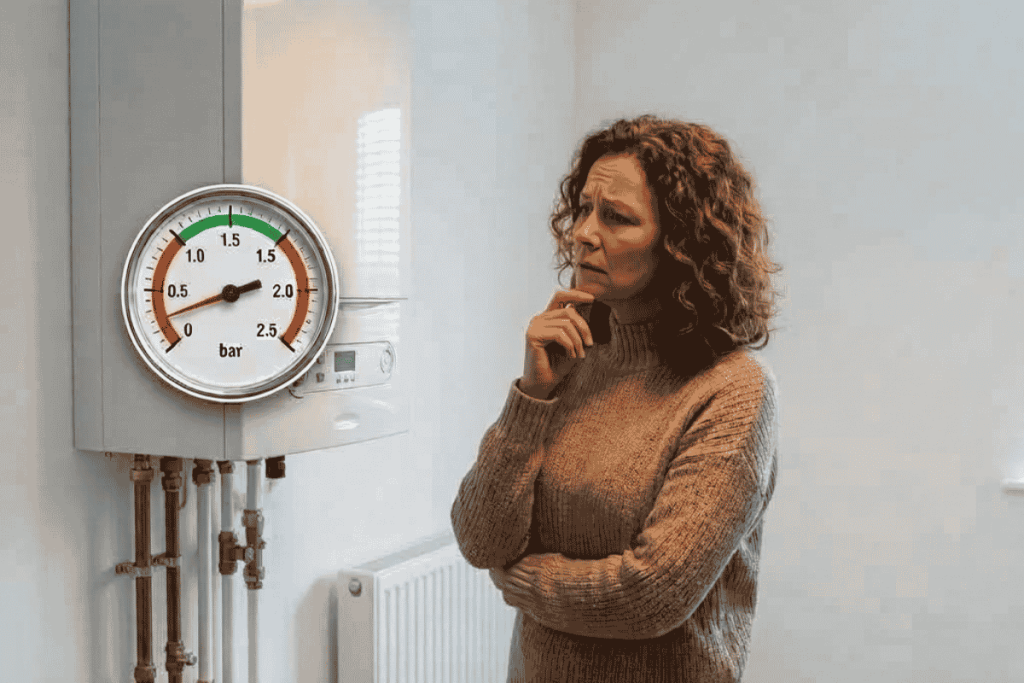
For many domestic boilers, the pressure should normally sit around 1 to 1.5 bar when the heating system is cold.
When you turn the heating on, the water inside the system heats up and expands. Because of this, it’s normal for the pressure gauge to rise slightly while the heating is running.
Once the heating is switched off and the system cools, the pressure should reduce again.
What isn’t normal is having to regularly repressurise your boiler, seeing the pressure repeatedly fall below its normal range, or noticing large changes between a hot and cold system.
If that’s happening, the next step is to understand where the pressure is being lost.
“Many customers call us saying: ‘It works after I reset it… but then stops again.’ That’s a key sign of an underlying fault.”
Why Does My Boiler Pressure Keep Dropping?
There isn’t one single cause of low boiler pressure. However, there are several common problems we look for when diagnosing a heating system that keeps losing pressure.
1. A Small Leak in the Central Heating System
One of the most common reasons for boiler pressure dropping is simply that water is escaping somewhere from the heating system.
It doesn’t necessarily have to be a large or obvious leak.
Small leaks can develop around:
- Radiator valves
- Pipe joints
- Exposed heating pipework
- Radiator connections
- Components around the boiler
Check around your radiators and any visible pipework for small amounts of water, damp patches, staining or signs of corrosion.
Some leaks can become more noticeable when the heating is running because the pipework and components are hot and under pressure.
However, never remove your boiler casing to look for a leak yourself. If there appears to be water coming from inside the boiler, it needs to be investigated by a suitably qualified engineer.
2. A Problem With the Expansion Vessel
Your boiler’s expansion vessel has an important job.
As the water inside your central heating system gets hotter, it expands. The expansion vessel is designed to accommodate this change and help keep the system pressure under control.
If the expansion vessel loses its charge or develops a fault, you may notice a particular pattern:
The pressure rises considerably when the heating comes on, then drops very low after the system cools down.
For example, if your boiler starts at a normal cold pressure but climbs towards the upper end of the gauge when the heating is running, something may not be working correctly.
Excessive pressure can cause the system’s pressure relief valve to operate and discharge water. When the boiler cools again, you’re then left with less water in the system and a low-pressure reading.
An expansion vessel is an internal boiler component and should be checked by a qualified heating engineer.
3. A Pressure Relief Valve (PRV) Problem
The pressure relief valve, commonly called the PRV, is a safety component designed to release water if the pressure inside the heating system becomes too high.
Normally, you shouldn’t have to think about it.
However, if the PRV has operated and doesn’t seal correctly afterwards, a small amount of water can continue escaping from the system.
Over time, that loss of water causes your boiler pressure to fall.
One clue can be water dripping from the boiler’s external discharge pipe, particularly after the heating has been running.
If you suspect a PRV problem, don’t attempt to repair or replace it yourself. The reason the valve has discharged also needs investigating rather than simply changing the valve.
What Does Your Boiler Pressure Gauge Tell You?
You don’t need to diagnose the boiler yourself, but watching how the pressure behaves can provide useful information.
Pressure gradually drops over several days
This can indicate a small leak somewhere in the heating system. Check visible radiator valves, joints and pipework for signs of water.
Pressure rises significantly when the heating comes on and falls when it cools
This can indicate an issue with the expansion vessel or pressure relief valve and should be investigated professionally.
Pressure falls below 1 bar and the boiler stops working
Many boilers can lock out or stop operating correctly when system pressure becomes too low.
You have to top the pressure up every few days
This isn’t something you should simply accept as normal. A sealed heating system shouldn’t continually need fresh water adding to it.
The underlying reason for the pressure loss needs finding.
How Do I Stop My Boiler Pressure From Dropping?
This depends entirely on what’s causing it.
If the pressure is simply low and there are no obvious signs of a larger problem, you may be able to repressurise the boiler yourself.
However, repressurising the system isn’t the same as repairing it.
If the pressure keeps disappearing, topping it back up is only treating the symptom.
How to Repressurise a Boiler Safely
The exact process varies between boiler manufacturers and models, so always check your boiler manufacturer’s instructions first.
For boilers with a filling loop, the general process is:
- Switch the heating off and allow the system to cool.
- Check the current pressure reading.
- Locate the boiler’s filling loop or filling mechanism.
- Open it slowly and allow water into the system.
- Watch the pressure gauge carefully.
- Repressurise to the level recommended by your boiler manufacturer.
- Make sure the filling mechanism is completely closed afterwards.
For many domestic systems, the recommended cold pressure is approximately 1 to 1.5 bar, but don’t assume this is correct for every boiler.
If you’re unsure which valves operate the filling loop, don’t open valves at random. Check your boiler manual or ask a professional.
Can I Just Keep Topping Up My Boiler Pressure?
This is something we see regularly on boiler repair call-outs.
The homeowner knows how to use the filling loop, so every time the pressure drops, they simply top it back up.
The heating works again, so the problem appears to be solved.
But it isn’t.
If you’re having to repressurise your boiler every day or several times a week, water is being lost from the system or there’s another underlying fault that needs investigating.
Repeatedly introducing fresh water into a heating system isn’t a good long-term solution either. Fresh water introduces oxygen and minerals, which can contribute to corrosion and sludge formation within the heating system over time.
Rather than continually topping the pressure back up, find out why it’s dropping in the first place.
What We Commonly Find on Boiler Pressure Call-Outs
At Boiler Pro Solutions, we regularly attend homes where the owner has been topping up their boiler pressure for weeks or even months.
Sometimes the cause is relatively straightforward, such as a small leak around a radiator valve or connection.
In other cases, further investigation finds an issue with the expansion vessel, pressure relief valve or another part of the heating system.
This is why we don’t simply repressurise a boiler and consider the job finished.
Our approach is to look at how the pressure behaves, check for signs of water loss and diagnose the underlying problem before recommending the appropriate repair.
When Should I Call a Heating Engineer?
You don’t necessarily need an engineer because your boiler pressure has dropped once.
However, you should consider having the system professionally checked if:
- You have to repressurise the boiler regularly
- The pressure repeatedly falls below 1 bar
- Pressure rises excessively when the heating comes on
- Your boiler keeps locking out
- You can see water leaking from the boiler
- Radiator valves or pipework are leaking
- Water is coming from the external discharge pipe
- You’ve topped the pressure up but it quickly drops again
- The boiler is displaying a persistent fault code
If you’re unsure, it’s better to have the cause diagnosed rather than repeatedly resetting and repressurising the boiler.
What If My Boiler Is Showing a Fault Code?
Low pressure isn’t the only reason a boiler can lock out.
If your boiler has sufficient pressure but still refuses to fire, an error code can help narrow down the problem.
Baxi owners, for example, may come across an E133 fault, which relates to an ignition or flame failure rather than simply low system pressure.
If you have a Baxi 600 or 800 displaying this code, read our How to Fix a Baxi E133 Fault Code guide for the safe checks you can carry out before arranging a repair.
How Can I Prevent Boiler Pressure Problems?
Not every pressure problem can be prevented, but looking after your heating system can help identify smaller issues before they become larger repairs.
One of the simplest things you can do is have your boiler serviced annually.
During a boiler service, an engineer can check the operation and condition of the appliance and may spot developing issues that could otherwise go unnoticed.
It’s also worth occasionally checking your pressure gauge rather than waiting until the boiler stops working.
If the pressure is gradually changing over time, investigating it early is usually better than discovering the problem when you need your heating most.
Boiler Losing Pressure? Get the Cause Properly Diagnosed
If you’ve topped up your boiler but the pressure keeps dropping, don’t keep reaching for the filling loop.
There’s a reason the system is losing pressure.
Boiler Pro Solutions provides professional boiler repairs across Bolton and surrounding areas, diagnosing problems such as pressure loss, leaks, boiler lockouts, ignition faults and heating failures.
We’ll investigate what’s causing the problem, explain what we’ve found and advise you on the most sensible repair.
If your boiler is losing pressure repeatedly or has stopped working altogether, book a boiler repair with Boiler Pro Solutions and we’ll get to the bottom of the fault.
Book a service
- We'll get back to you with a quote, usually the same day.
Prefer to talk? Call 07917 729172.

Gas Safe Register 503163
Every job carried out by a registered engineer.
Frequently Asked Questions About Boiler Pressure
Why does my boiler pressure drop overnight?
If your boiler pressure is noticeably lower in the morning, water may be escaping somewhere in the heating system. Small leaks aren’t always obvious, so check visible radiator valves, connections and pipework. If it keeps happening, have the system investigated.
Why does my boiler pressure rise when the heating is on and fall when it cools?
Some movement is normal because heated water expands. However, a large rise followed by very low pressure when the system cools can indicate an expansion vessel or pressure relief valve problem.
How often should I need to top up my boiler pressure?
You shouldn’t normally need to continually repressurise a sealed central heating system. If you’re using the filling loop every few days or weeks, there is likely an underlying reason for the pressure loss.
Can my boiler lose pressure without a visible leak?
Yes. Not every leak is immediately visible. Water can escape from concealed pipework or through components such as the pressure relief valve. If you’ve checked the visible system and the pressure continues to fall, professional fault finding may be required..
Will low boiler pressure stop my heating from working?
It can. If the system pressure falls too low, many boilers will stop operating or lock out to protect the appliance. Repressurising may restore operation, but repeated pressure loss should still be investigated.
Related Articles

- Boiler Pro Solutions
Homeowner Advice Guide • 5 Min Read • Verified for 2026 When to Get a New Boiler: 5 Telltale Signs

- Boiler Pro Solutions

- Boiler Pro Solutions

- Boiler Pro Solutions